
Ice Heaves
Submit annual ice heave notification link at bottom of page
Ice Heave Along Lakeshores
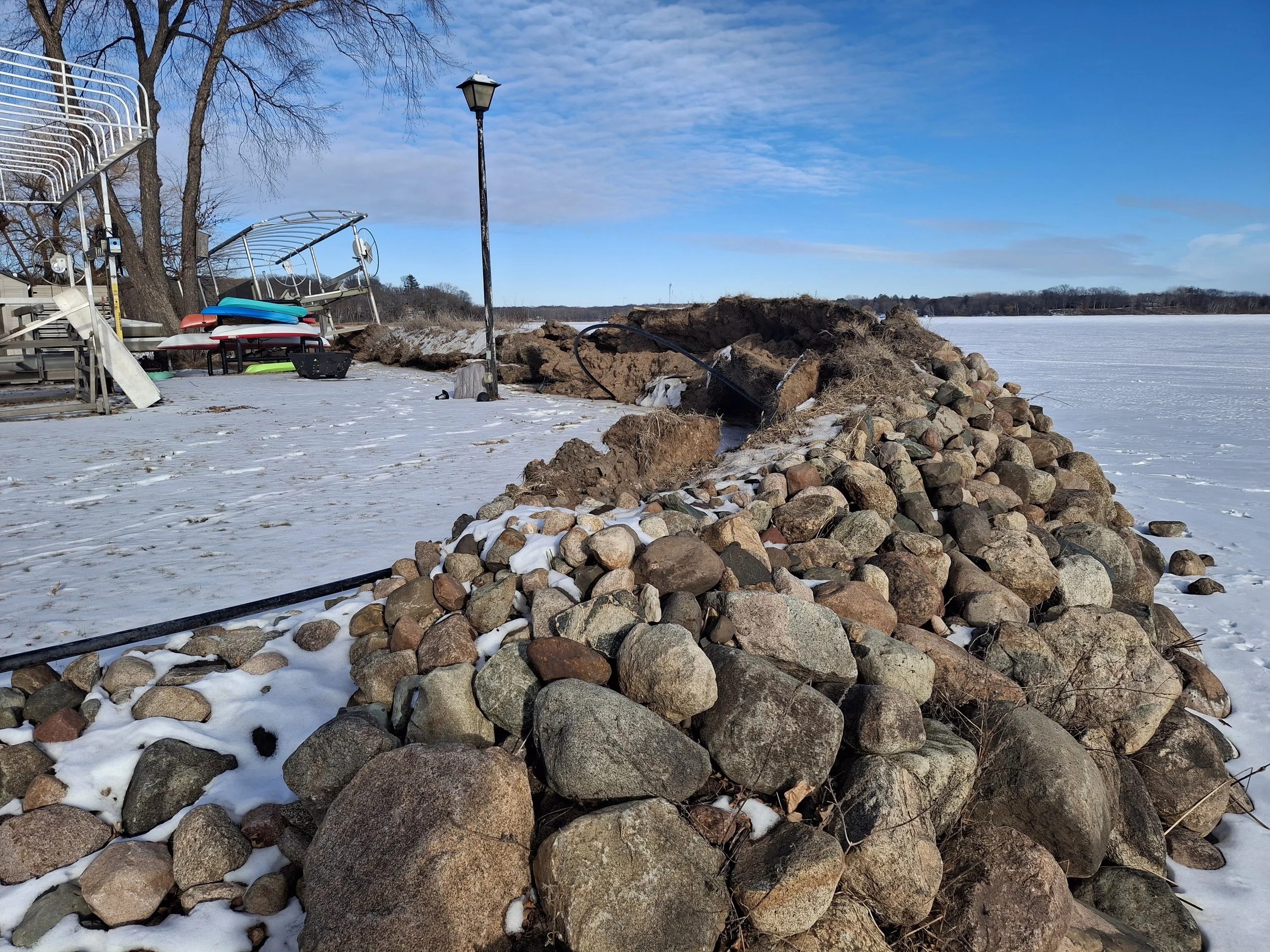
Ice heave is a natural shoreline process caused by the movement and expansion of lake ice during winter and spring. In some years, property owners may return after ice-out and find that soil, gravel, rock, or shoreline materials have been pushed up into a ridge or mound along the shore. This is often called an ice ridge, ice push, ice jacking, or ice heave.
Ice heave can damage docks, lifts, retaining walls, landscaping, and other shoreline features. It can also temporarily change how a shoreline looks or functions. While frustrating, it is important to understand that this is a natural phenomenon and not something that can be fully prevented or controlled. According to the Minnesota DNR, ice ridges form when lake ice cracks, expands, and repeatedly pushes shoreward during cycles of warming and cooling
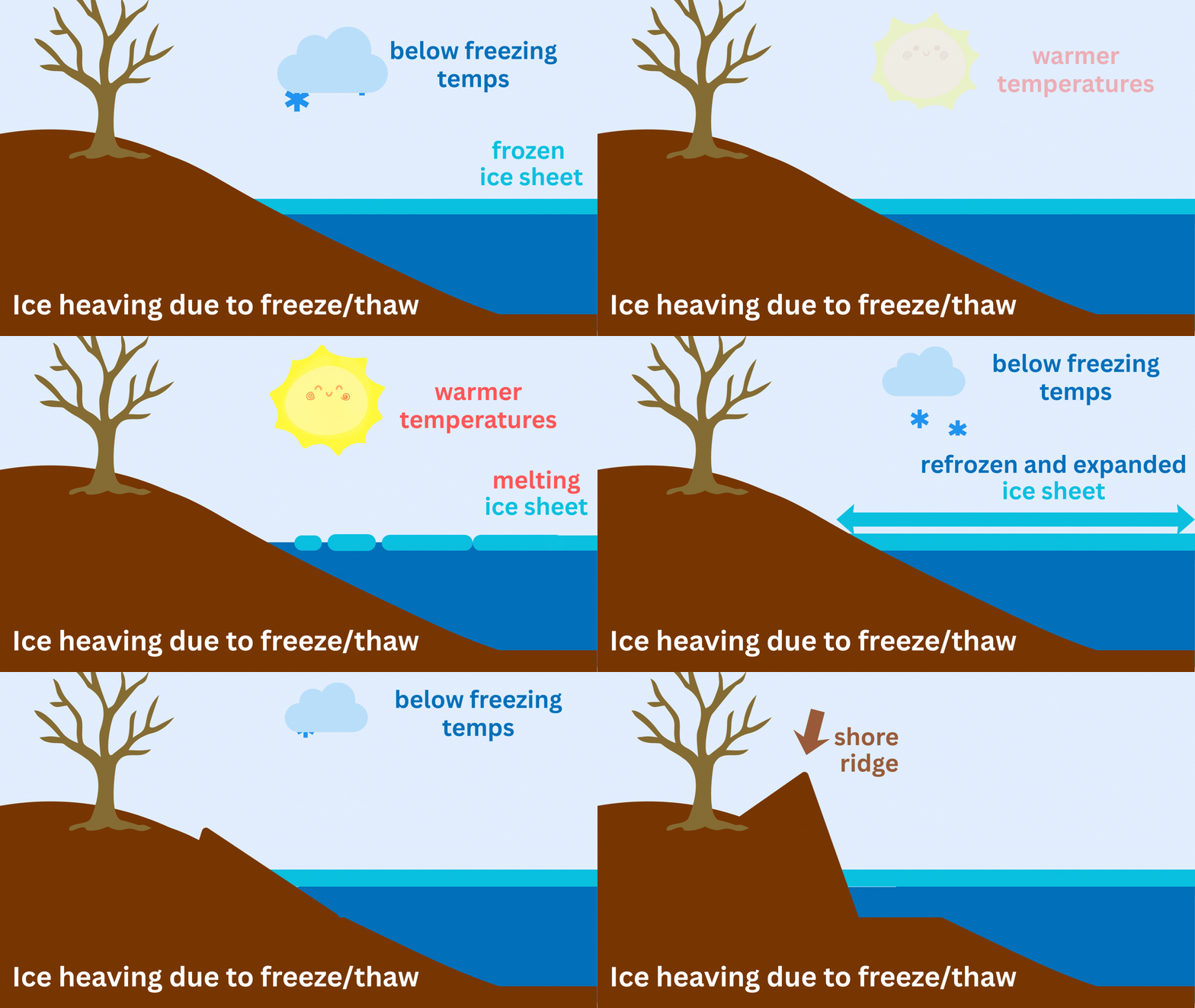
This is the broad pushing action expands during freeze-thaw cycles. The pressure moves shoreward until it suddenly ‘pops’ the shoreline.
Why Ice Heave Happens
According to the Minnesota DNR, ice ridges form when lake ice cracks, expands, and repeatedly pushes shoreward during cycles of warming and cooling ice or by floating masses of ice being blown into a shoreline. Ice heaves therefore are driven primarily by weather, snowpack, ice conditions, temperature swings, and lake characteristics.
Benefits of Ice Heaves
Ice ridges are also not always harmful. The DNR explains that natural ice ridges can provide ecological benefits by helping create a barrier to nutrient loading, supporting near-shore vegetation, and contributing to natural shoreline protection over time.
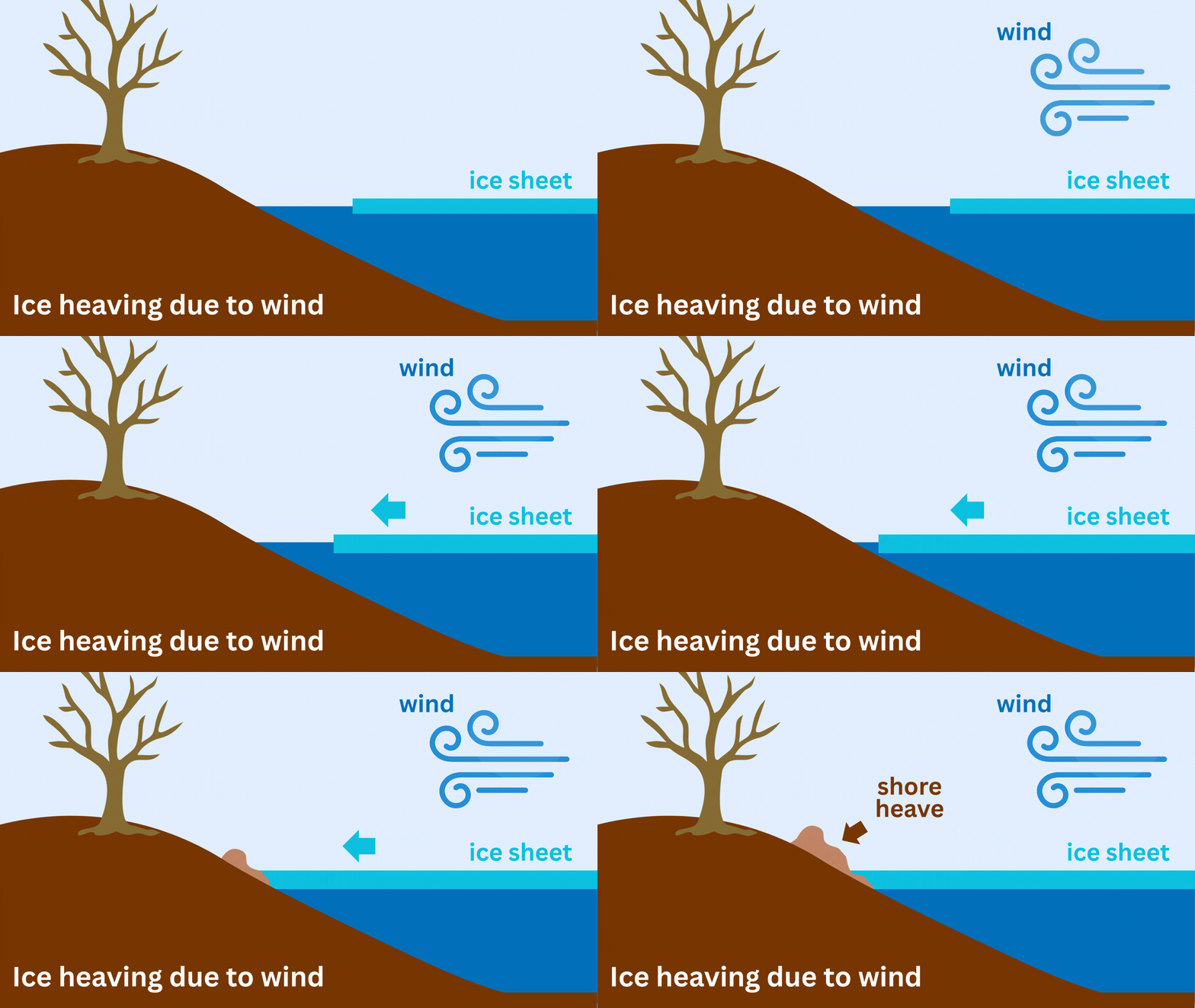
This is the broad scraping action when floating ice creeps into and up the shoreline.
Correcting Annual Ice Heaves
In some cases, annual ice heave correction can occur without an individual permit if specific conditions are met. This is intended for limited correction of recent annual ice heave, not for historic ice heaves (greater than 1 year old), redesigning shorelines, or expanding the shoreline.
To qualify, for the no permit exemption your restoration must follow all of the criteria:
the ice ridge must have resulted from ice action within the last year,
the project must either be exempt from local permits or authorized by local government,
no more than 200 feet of shoreline may be affected,
muck, clay, or organic sediment must be deposited and stabilized in an upland area above the ordinary high-water level,
sand or gravel must be removed or graded back to the original cross section and alignment of the lakebed, with the finished surface at or below the ordinary high-water level,
no additional excavation or replacement fill material (rocks, sand, soil) may be brought in or used on the site,
all exposed areas must be immediately stabilized to prevent erosion and sedimentation, and
local zoning officials, the watershed district, and the soil and water conservation district must receive at least 7 days’ notice before work begins .
The DNR also states that removal or grading of an ice ridge must not disturb emergent aquatic vegetation unless separately authorized by the DNR
Submit Your Required Notice or Request Assistance
CMSCWD has created a simple form to help landowners:
provide annual notice of qualifying ice heave correction work,
ask whether a project appears to qualify,
request help restoring or improving shoreline conditions, or
express interest in technical assistance or grant funding opportunities.
Important Reminder
Annual ice heave correction is generally meant to return the shoreline to its prior condition using material already on site. It is not intended for bringing in new rock, sand, gravel, or other fill, or for making broader shoreline changes beyond the annual heave area.
If you are interested in doing more than correcting recent annual ice heave, this may be a good opportunity to explore shoreline restoration, buffer improvements, or other approaches that can better protect water quality and shoreline health..